
What is EPR? Questions Every Brand Owner Should Be Asking
Extended Producer Responsibility (EPR) is quickly becoming one of the most important regulatory changes impacting packaging in North America. For many brand owners, however, the details remain unclear. What is EPR? Why is it happening? And what should companies be doing now to prepare?
Understanding these questions early can help brands avoid future costs, simplify compliance, and make smarter packaging decisions.
What is EPR?
Extended Producer Responsibility (EPR) is a regulatory approach that shifts the cost of recycling packaging from municipalities to the companies that produce and sell packaged goods.
In simple terms: brands will pay fees based on the packaging they put into the market.
Historically, local governments funded recycling programs through taxes. Under EPR, companies become financially responsible for managing the packaging waste generated by their products.
These programs are designed to improve recycling infrastructure while encouraging brands to design packaging that is easier and more cost-effective to recycle.
Why is EPR being implemented?
Recycling systems across the U.S. and globally are under increasing pressure. Several factors are driving governments to adopt EPR programs:
- Rising waste volumes
- Increasing recycling and processing costs
- Low recovery rates for many packaging materials
To address these challenges, governments are shifting financial responsibility to producers and incentivizing better packaging design.
The goal is to fund improved recycling systems while reducing the amount of difficult-to-process packaging entering the waste stream.
Where is EPR today?
EPR is no longer a future concept—it is already being implemented in several regions.
United States
Several states have passed EPR legislation, including:
- California
- Colorado
- Oregon
- Maine
Additional states are actively evaluating similar legislation, and fee structures and reporting requirements are currently being finalized.
Global influence
EPR policies are also expanding globally.
Europe is implementing aggressive packaging regulations through the Packaging and Packaging Waste Regulation (PPWR), while Canada already operates under established EPR systems.
As a result, many global brands are beginning to standardize packaging strategies to comply with regulations across multiple markets.
Where is EPR going?
Over the next three to five years, EPR programs are expected to expand significantly.
Key trends likely to emerge include:
- Expansion of EPR legislation into additional U.S. states
- More defined and impactful fee structures
- Direct links between packaging design and regulatory costs
- Packaging decisions becoming a strategic financial consideration
In other words, packaging will move beyond a procurement decision and become a financial lever that directly impacts operational costs.
How will EPR affect brands?
EPR introduces a new cost layer that is directly tied to packaging design.
Fees will generally be calculated based on several key factors.
Material type
Different materials carry different recycling costs.
- Plastic packaging = higher fees
- Paper-based materials = lower costs
Recyclability
Packaging that is widely recyclable is likely to receive lower fees.
- Easily recyclable materials = lower cost
- Difficult or non-recyclable materials = higher cost
Packaging complexity
Complex packaging formats are harder to recycle.
- Mono-material packaging = lower cost
- Multi-material packaging = higher cost
Weight
Heavier packaging increases recycling costs.
- Lightweight packaging = lower fees
- Heavier packaging = higher fees
These factors mean that packaging design decisions will increasingly have financial implications.
What types of packaging are most impacted?
Certain packaging formats are more likely to face higher EPR fees.
Higher risk (higher cost exposure)
- Plastic-heavy packaging
- Multi-material formats (plastic + paper + foam)
- Laminated or difficult-to-recycle structures
- Overbuilt or heavy packaging
Lower risk (more EPR-friendly)
- Paperboard-based packaging
- Mono-material designs
- Lightweight, optimized structures
- Widely recyclable formats
Why brands should act now
While some EPR programs are still being finalized, the direction is clear. Companies that begin preparing now will be in a much stronger position.
Early action allows brands to:
- Reduce future EPR fees
- Avoid rushed packaging redesigns later
- Simplify reporting and compliance requirements
- Strengthen sustainability positioning
Waiting until regulations are fully implemented may limit flexibility and increase costs.
Questions brand owners should be asking
As EPR programs continue to develop, brand owners should begin evaluating their packaging strategy with a few key questions in mind:
- What materials are currently used in our packaging?
- How recyclable are our existing formats?
- Are there opportunities to simplify packaging structures?
- Could lighter-weight or paper-based alternatives reduce future costs?
- Are our packaging suppliers prepared to support EPR-related changes?
These conversations can help brands identify opportunities before regulatory pressure increases.
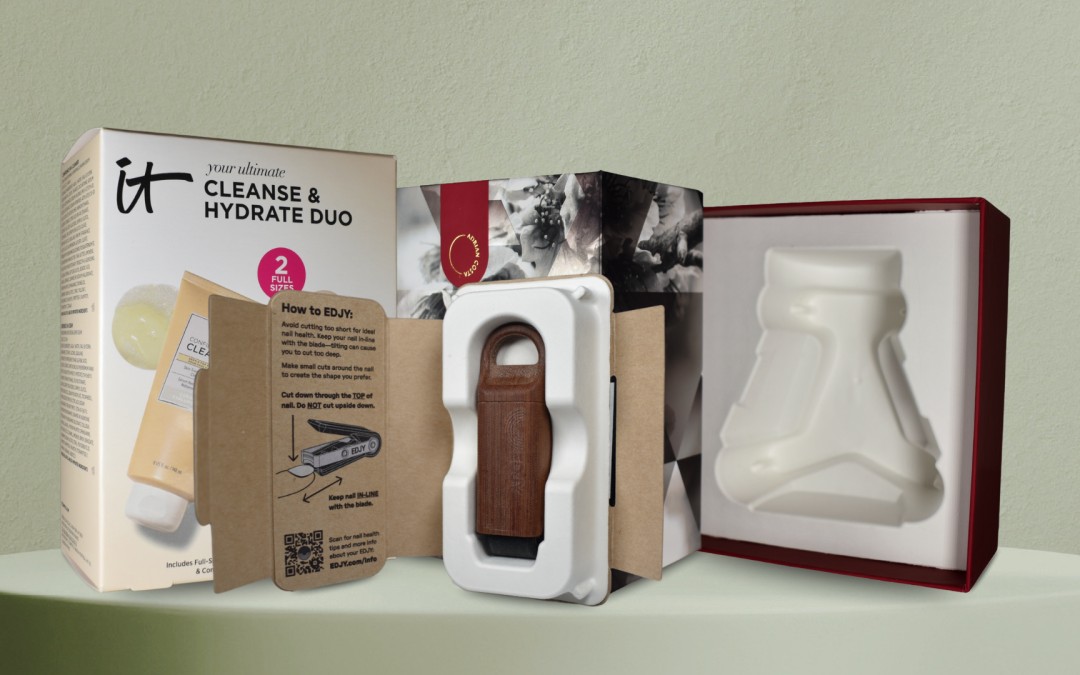
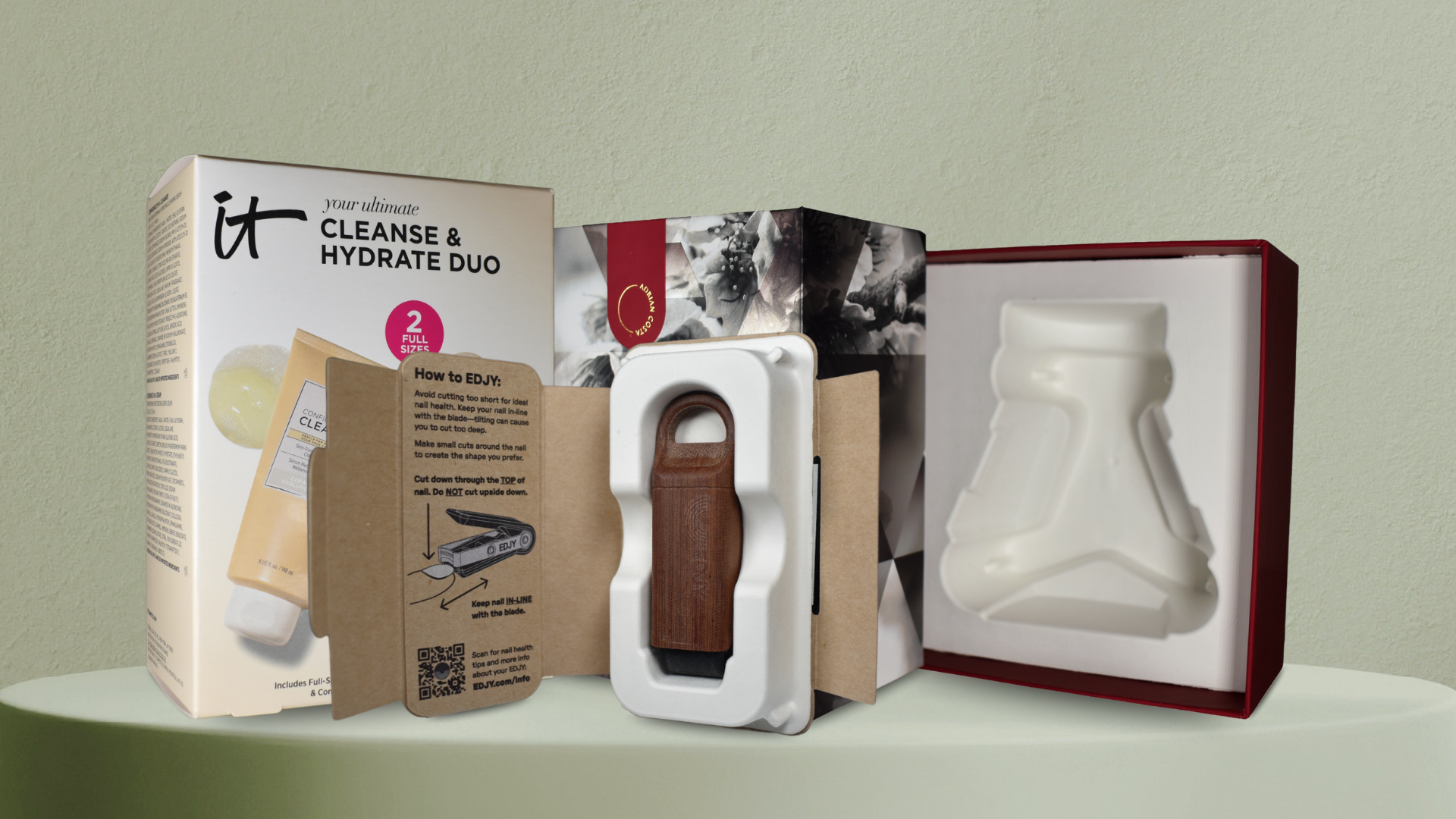
EPR-friendly packaging solutions
Several packaging formats are naturally well-positioned for EPR systems due to their recyclability and material simplicity.
These formats are paper-based, widely recyclable, and easier for recycling systems to process compared to complex multi-material packaging.
Molded Pulp Packaging
Biodegradable and made from recycled material, molded pulp is a great alternative to thermoformed plastic or foam inserts.
Paperboard Folding Cartons
Folding cartons are lightweight, extremely versatile, and easily customized with premium print, specialty coatings, embossing, and foil.
Rigid Boxes
Made from recycled material, rigid boxes offer luxury presentation and a premium unboxing experience.
Preparing for the future of packaging
EPR is poised to reshape how brands think about packaging. As regulations expand and fee structures become more defined, packaging design will increasingly influence both compliance and cost.
Companies that proactively evaluate their packaging today will be better positioned to manage risk, reduce fees, and meet evolving sustainability expectations.
Talk with a packaging expert
If you’re evaluating how EPR may impact your packaging, our team can help.
At Wynalda Packaging, we work with brands to design fiber-based, recyclable packaging solutions that align with evolving sustainability and regulatory requirements.
Whether you’re exploring molded pulp inserts, paperboard folding cartons, or rigid box structures, we can help you identify opportunities to optimize your packaging strategy.