
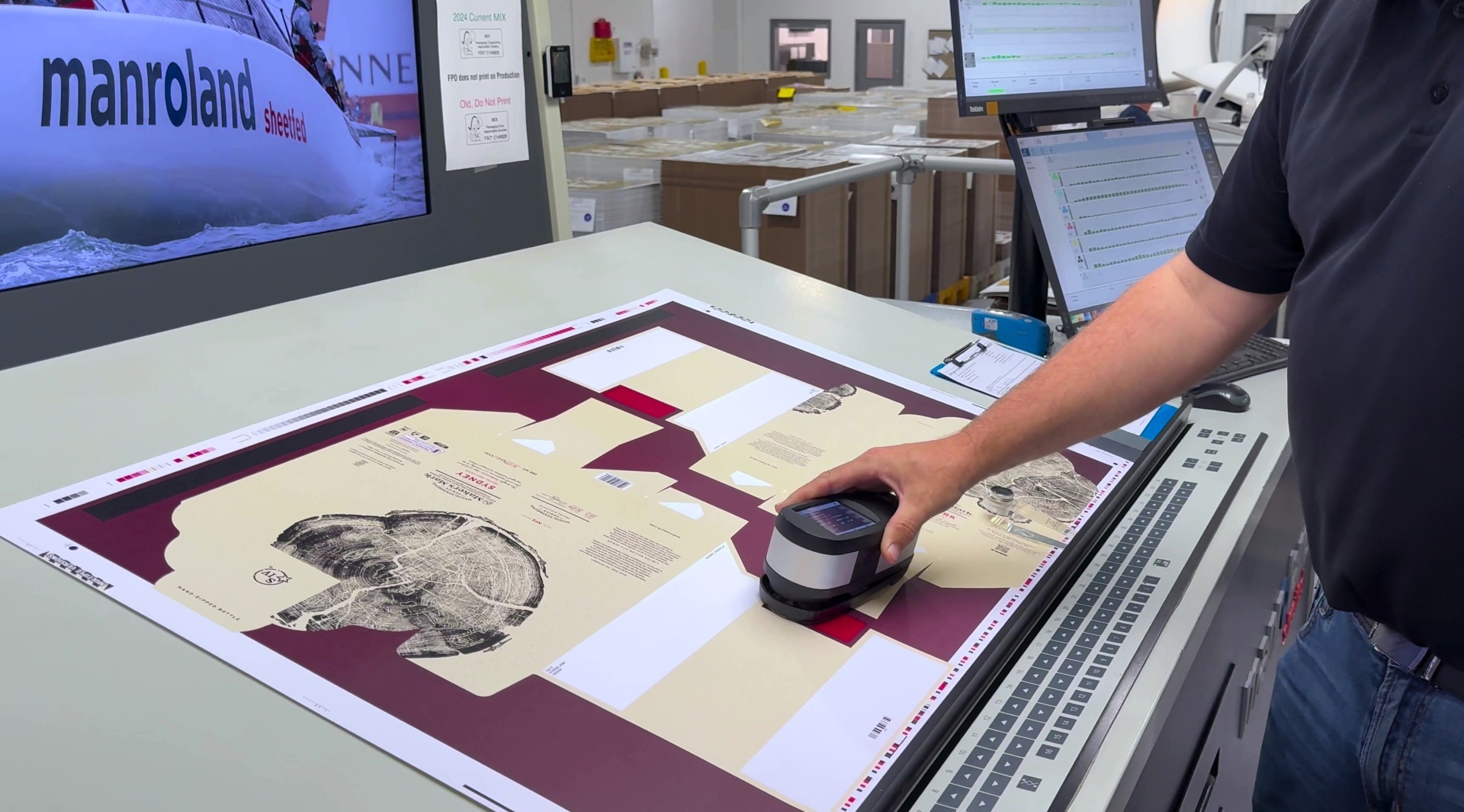
For brands that rely on premium packaging, color consistency is not just a design preference — it is a critical part of maintaining brand recognition and customer trust. Whether packaging is being reordered months later, produced on different substrates, or printed using different technologies, customers expect the same brand colors every time.
Achieving that level of consistency requires more than simply matching an ink formula. Factors like substrate type, print method, and even storage environments can all impact how a color appears on finished packaging. That is why maintaining consistent color across every production run requires a combination of standardized processes, color expertise, and production flexibility.
Consistency Across Different Print Runs
One of the biggest challenges in packaging production is ensuring that repeat orders match previous runs exactly. Even small color shifts can become noticeable when products sit side-by-side on retail shelves.
To maintain consistency over time, establishing approved color standards is essential. At Wynalda Packaging, physical color standards are created for each customer and sent for approval before production begins. Once approved, these standards become the reference point for all future jobs.
Because physical color references can shift over time if exposed to improper conditions, they are stored in controlled environments along with samples from previous jobs to prevent fading or color changes. This ensures that the approved standard remains accurate and reliable for future production runs.
Color management expertise also plays a major role in achieving repeatable results. Having a G7 color expert on staff helps ensure color calibration and print consistency throughout the production process. G7 methodology focuses on achieving visual consistency across devices and print conditions, helping maintain predictable color reproduction from run to run.
Consistency Across Different Substrates
Even when using the exact same ink formula, colors can appear different when printed on different substrates. Paper shade, coating type, surface texture, and absorbency all influence how ink reflects light and how the finished color is perceived.
For example, a color printed on bright white SBS paperboard may appear noticeably different when printed on a kraft substrate or an uncoated paperboard. Gloss coatings, matte finishes, and textured materials can also impact the final appearance.
To compensate for these differences, ink formulations are adjusted before production begins based on the substrate being used. However, color matching is not always a set-it-and-forget-it process. During production, press conditions and substrate variation can still require additional fine-tuning.
Our in-house ink room provides the flexibility to make real-time ink adjustments during a production run when needed. This allows operators to refine color on press and achieve a closer visual match across varying materials and packaging formats.
Consistency Across Different Print Methods
As packaging production evolves, many brands are utilizing multiple print technologies to support different order sizes, lead times, and customization needs. However, maintaining color consistency across different printing methods creates an additional challenge.
Traditional offset lithographic printing and digital printing produce color differently, requiring carefully controlled color management systems.
Advanced digital printing technology has significantly narrowed that gap. The Landa S11 Offset Digital Press can reproduce approximately 97% of Pantone colors, allowing brands to achieve highly accurate color matching between digital and conventional offset production.
This capability gives brands greater flexibility to transition between print methods while maintaining consistent brand appearance across packaging programs.
The Importance of a Controlled Color Management Process
Consistent color does not happen by accident. It requires standardized color references, experienced color management, substrate-specific adjustments, and the ability to fine-tune production in real time.
For brands investing in premium packaging, these processes help ensure that packaging remains visually consistent regardless of when it is produced, what material it is printed on, or which print technology is used.
When color consistency is properly managed, brands can maintain stronger shelf presence, reinforce brand recognition, and deliver a more reliable customer experience across every packaging touchpoint.