
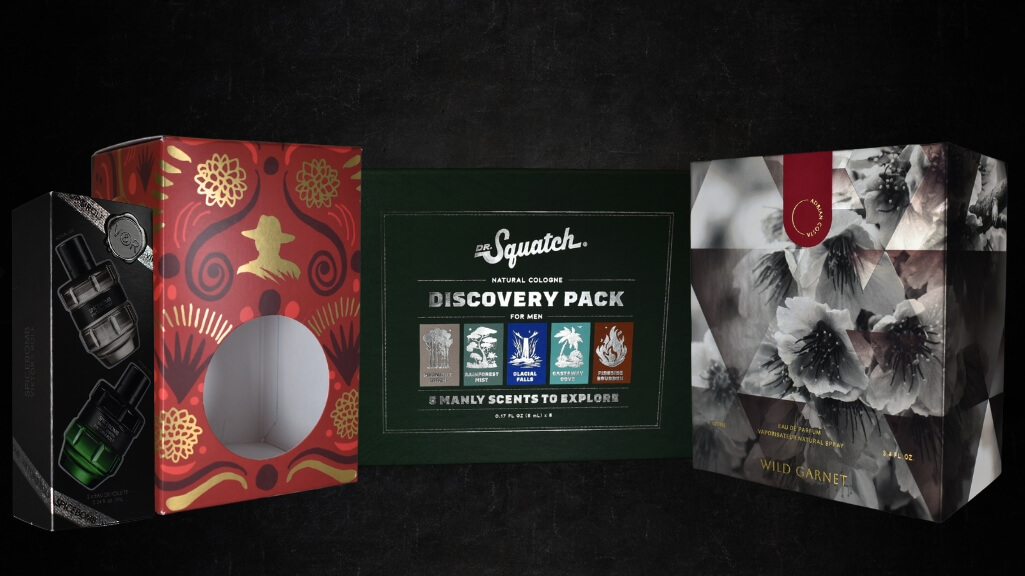
Foil is one of the fastest ways to make a folding carton or rigid box feel premium. That flash of metallic gold, silver, or holographic color catches the eye on a shelf and signals quality before a customer even picks the product up. But not all foil is applied the same way, and the method you choose has a real impact on cost, turnaround, and the final look of your packaging.
The two most common approaches are hot foil stamping and cold foil printing. They can produce similar-looking results, but they work in very different ways, and each has its own sweet spot. Here’s a breakdown to help you decide which one fits your next carton or rigid box project.
What Is Hot Foil Stamping?
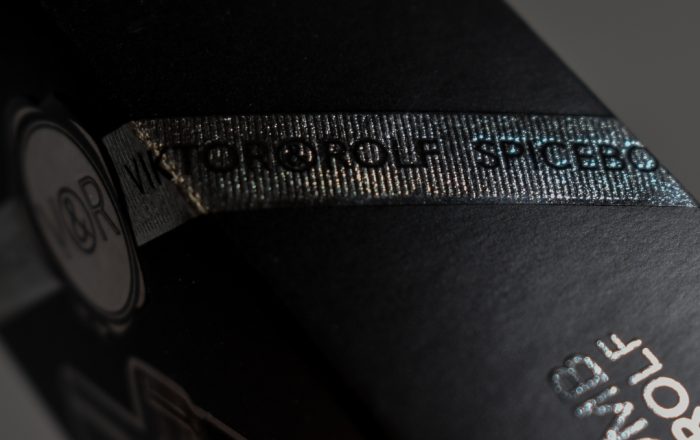
Hot foil stamping is the more traditional of the two processes, delivering a rich, high-shine metallic finish.
It uses a heated metal die, engraved with your design, to press a thin layer of foil onto the box surface. Heat and pressure combine to transfer the foil only where the die makes contact, fusing it to the substrate and often leaving a subtle, tactile impression behind.
Because each project needs its own die, hot foil stamping has a higher upfront tooling cost and a longer setup time. That investment pays off in a distinctive, dimensional effect that’s hard to replicate any other way.
What Is Cold Foil Printing?
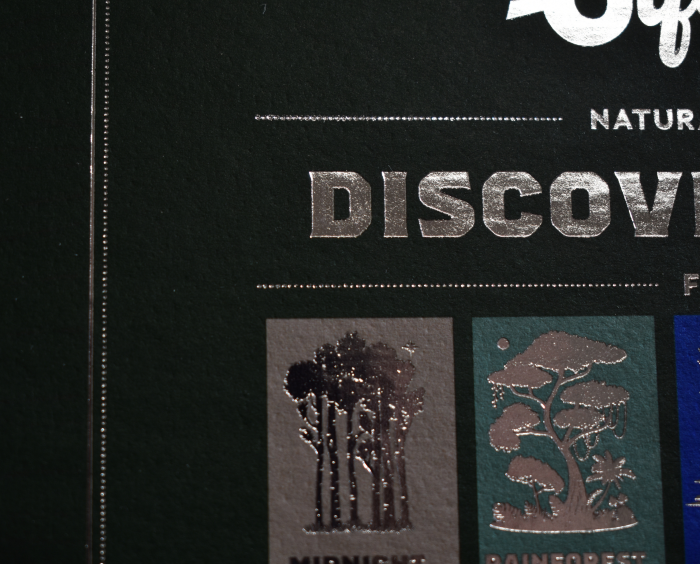
Cold foil produces a flat, high-gloss metallic effect. Instead of heat and a die, it uses an adhesive applied in the exact pattern of the design. The foil is laminated onto the adhesive at room temperature, and the excess foil is then stripped away, leaving foil only where the adhesive was applied.
Because it happens inline on an offset printing press, cold foil can be overprinted in a single pass to create custom foil colors. This also makes it efficient for high-volume folding carton runs, and since no custom die is required, the tooling costs are lower.
Cold foil shines when a folding carton design calls for large areas of foil coverage, fine detail, or foil that needs to interact with other printed colors, which is difficult and expensive to achieve with a stamping die.
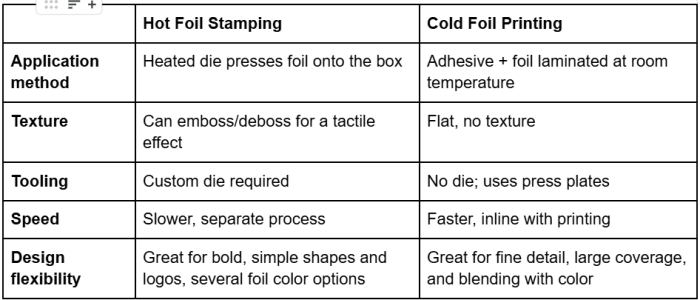
Comparing the Two Side by Side
Which One Should You Choose?
The right choice really comes down to your priorities:
- Choose hot foil stamping if texture and a premium tactile feel are central to your brand experience and your design uses bold, simple shapes like a logo or border.
- Choose cold foil printing if your design has fine detail or heavy foil coverage or you want to combine foil with full-color printing efficiently.
In some cases, the two can even be combined on the same box, using cold foil for broad coverage and hot foil stamping to add texture to a logo or key design element for extra impact.
Let’s Talk About Your Project
Foil is one of the most powerful tools for making first impressions count. Whether you’re considering hot foil stamping, cold foil printing, or a combination of both for your next folding carton or rigid box project, our team can help you find the right approach for your run size, budget, and brand goals.
Get in touch with Wynalda today to talk through your next packaging or project!